

 19.54
19.54


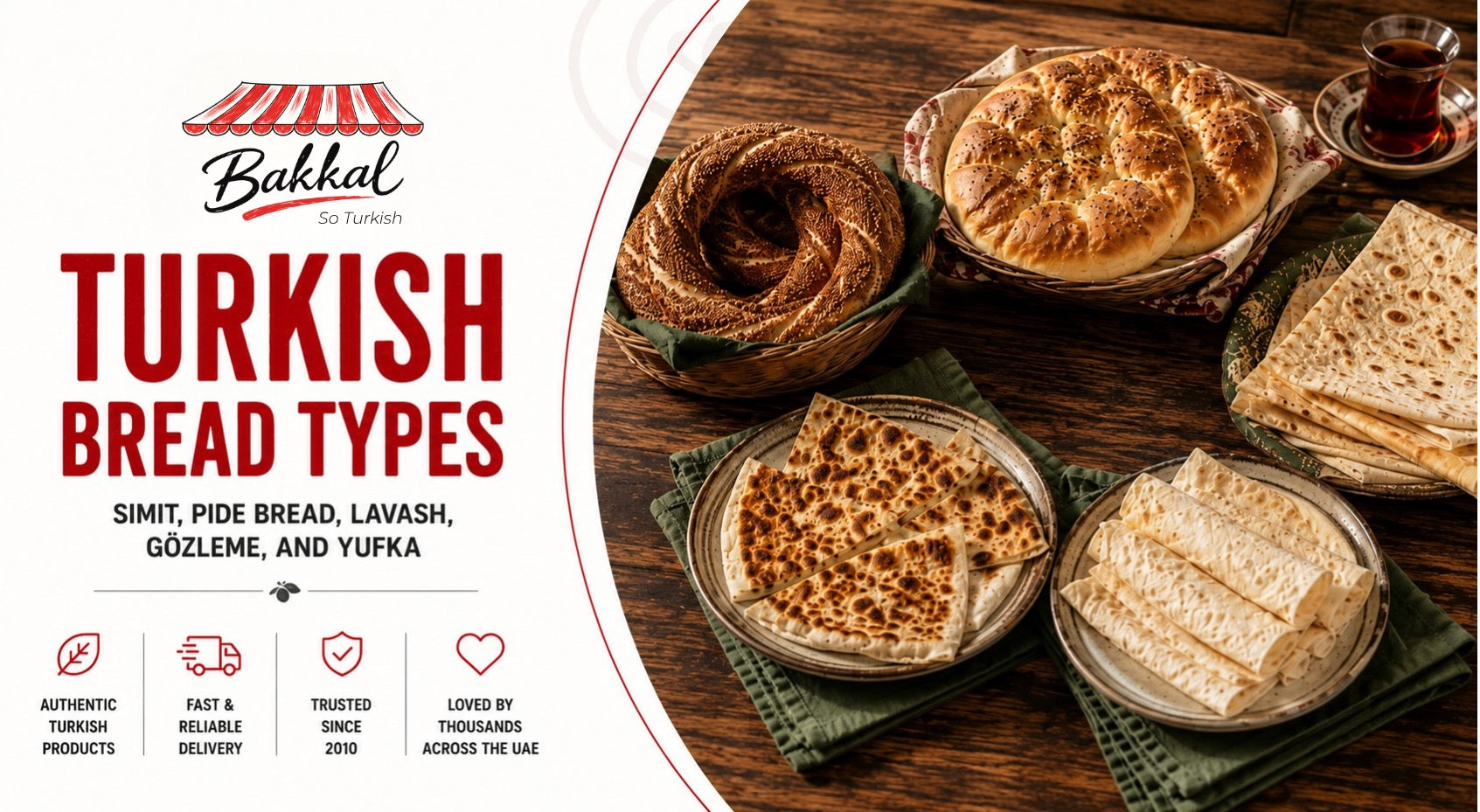
Bread is not a side item in Turkish cooking. It is central to the meal. On a Turkish table, bread is almost always present, whether at breakfast alongside cheese and olives, at lunch wrapped around grilled meats, or at dinner as part of a meze spread. The variety of Turkish bread types reflects that role directly: different textures and shapes for different purposes, different flavors for different times of day, different baking methods for different occasions.
Understanding which bread does what makes it much easier to choose the right one and know how to use it.
Simit
Sesame-coated ring bread. Breakfast staple and street food classic.Simit is the sesame-coated bread ring that has become one of the most recognizable symbols of Turkish street food. The dough is shaped into a ring, dipped briefly in grape molasses for that deep-gold color, then rolled in sesame seeds and baked at high heat. The inside stays soft and chewy while the crust holds a distinct crunch, at least for the first hour or so out of the oven.
In Istanbul, simit is sold from glass-fronted carts on street corners and carried through markets in wide baskets. A typical Turkish morning pairs it with white cheese, a few olives, a sliced tomato, and a glass of black tea. It works just as well eaten plain as a quick snack any time of day.
A few variations exist beyond the plain version: grain simit made with whole wheat has a nuttier flavor, sunflower seed simit swaps out the sesame coating, and wholemeal simit is denser and more filling. All bake the same way.
Simit freezes well. Reheat from frozen in a 180-degree oven for 5 to 8 minutes. The texture after reheating is close to fresh.
Pide Bread
Flatbread with multiple forms. The most essential bread on a Turkish iftar table.Pide bread covers several distinct forms. The one most familiar outside Turkey is the boat-shaped flatbread topped with minced meat, sucuk (soujouk), eggs, or cheese, baked at very high heat in a wood-fired oven. It's often compared to Turkish pizza, though the dough is softer and the toppings sit built into the surface rather than piled on top.
The plain version without toppings matters just as much. Ramadan pide bread is the most culturally significant of all: a round loaf dimpled into a crosshatch pattern with the fingertips, brushed with egg yolk, and baked only during the month of Ramadan. Its arrival in bakery windows is one of the first signs the month has begun, and it is carried home in paper bags to anchor the iftar table.
Stuffed mini pide bread, filled with spinach and cheese, potato, or tomato and cheese, sits closer to a savory pastry than a flatbread. It works well for breakfast, a light lunch, or a warm addition to a meze spread.
Lavash
The everyday workhorse bread, built for wrapping, scooping, and layering.Lavash is a large, thin flatbread baked at very high heat, traditionally against the walls of a clay oven. Fresh off the oven it is soft and pliable, with light charring in places, and tears easily into pieces. It's one of the most widely used flatbreads from Turkey through the Caucasus and Central Asia.
Lavash works as a wrap, a scoop for meze dips, and an edible base for grilled meats. At a meze table, a basket of torn pieces is the standard bread choice, thin enough to scoop hummus or patlican yogurtlama without falling apart. Stale lavash isn't wasted either: soaked briefly in broth it thickens a soup, or layered with cheese and herbs and baked it turns into a quick borek.
Lavash sold in packs keeps well in the refrigerator for several days and can also be frozen in sealed bags.
Yufka
Paper-thin pastry sheets. The foundation of boregi and gozleme.Yufka is rolled to near-transparency using a long, thin rolling pin called an oklava. The sheets are cooked briefly on a dry griddle called a sac, just long enough to set the surface without adding color. Yufka is the dough from which Turkish borek (layered pastry pies) and gozleme (stuffed flatbreads) are made.
Yufka behaves differently from lavash despite both being thin flatbreads. It is more delicate, more pliable when fresh, and is designed to be used in combination with other ingredients rather than served on its own. Sheets of yufka are layered with fillings and either baked or pan-fried. Ready-made yufka sheets are available for home baking and are a practical ingredient if you want to make borek without making the dough from scratch.
Gozleme
Stuffed flatbread cooked on a hot griddle. A complete dish, not just a bread type.Gozleme is made from yufka and cooked directly on a large, convex griddle. The dough is rolled thin, filled, folded, and pressed flat, then cooked until the surface is lightly crisped and the filling is hot throughout. The word gozleme comes from the Turkish word for eye (goz), referring to the small sealed pockets that sometimes form during cooking.
The three most common fillings are white cheese with flat-leaf parsley, potato with caramelized onion, and spinach with feta-style cheese. Gozleme is filling enough to serve as a complete meal. In Turkey, it is strongly associated with village markets and roadside stands, where it is rolled and cooked to order by hand. Frozen ready-made gozleme reheats well in a dry pan over medium heat or in the oven.
Tombik / Somun Bread
The everyday Turkish roll. The standard vehicle for Turkish sandwiches.Somun is the round, slightly domed white loaf that serves as everyday bread in Turkish households. Tombik (meaning chubby or plump in Turkish) refers specifically to the rounder, more enriched sandwich roll version, sometimes made with a small amount of butter in the dough. It has a soft, pillowy crumb and a thin crust that does not require much effort to cut or bite through.
The tombik is the roll used for Turkish street sandwiches, particularly in the Aegean and Marmara regions. Fill it with sliced sucuk and white cheese for a simple breakfast sandwich. Add a few olives and a sliced tomato alongside and it becomes a proper kahvalti (Turkish breakfast) plate.
Quick Reference: Which Bread for What
| Breakfast | Simit, tombik, or lavash alongside cheese, olives, and eggs |
| Meze and dips | Lavash (easiest to tear and scoop), plain pide bread as a secondary option |
| Wrapping and sandwiches | Lavash for wraps, tombik for sandwiches |
| Baking (borek, gozleme) | Yufka sheets |
| Ramadan iftar table | Ramadan pide bread is traditional |
| As a meal on its own | Gozleme, stuffed mini pide bread |
Keeping Turkish Bread Fresh
Most Turkish breads are best eaten on the day they are made. This is particularly true of simit, which loses its signature crunch within hours. For home storage, fresh bread keeps well at room temperature in a cloth bag or paper bag for one day. Beyond that, freezing is the better option.
Lavash and yufka are exceptions to the single-day rule. Lavash actually works well slightly dried out, as it crisps up nicely when briefly warmed and does not become unpleasant when stale the way enriched dough does. Yufka sheets are typically sold in quantities designed for home baking projects rather than daily snacking and keep refrigerated for up to a week.
For frozen bread: Simit reheats from frozen at 180 degrees for 5 to 8 minutes. Lavash can be thawed at room temperature in 15 minutes. Frozen gozleme reheats in a dry non-stick pan over medium heat for 2 to 3 minutes per side. Ramadan pide bread warms well in the oven at 160 degrees for about 8 minutes from room temperature.
Turkish Bread in the UAE
Finding fresh-baked Turkish bread daily in the UAE requires access to a dedicated bakery, which is not always practical depending on where you live. For consistent access to simit, pide bread, lavash, yufka, and gozleme, an online delivery option gives you the most reliable results. Bakkal.ae carries a range of Turkish breads and pastry bases, including fresh, baked, and frozen options. Frozen items maintain quality well and are a practical way to keep Turkish bread on hand without planning around daily bakery runs.


