

 19.54
19.54


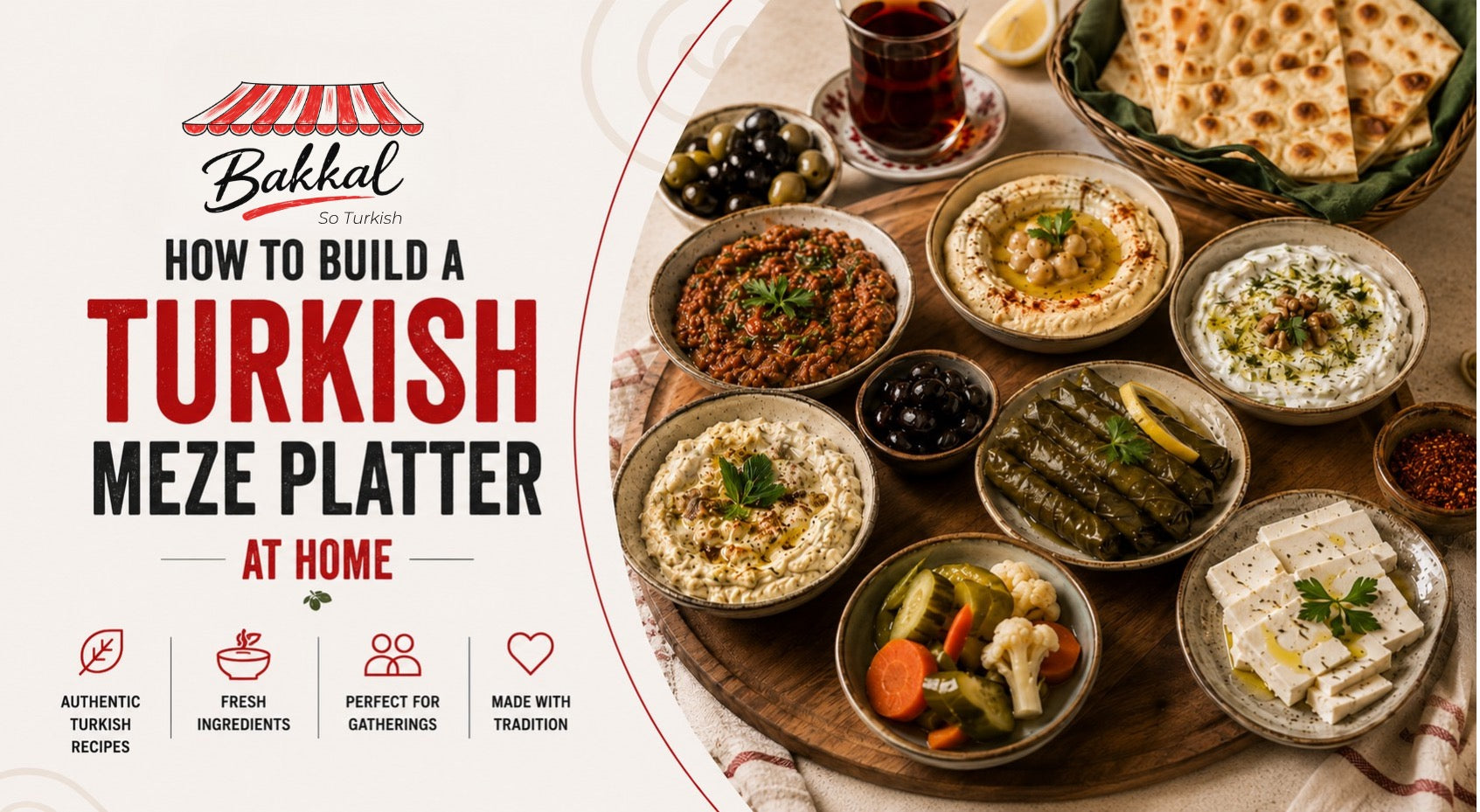
A Turkish meze table is less about strict rules and more about abundance. You set out more than you expect to finish, and somehow that always turns into exactly the right amount. The spread might include cold dips, white cheese, a small bowl of olives, a few stuffed vine leaves, and perhaps some warm pastries at the end. Nobody arrives with a plate and formal cutlery. You reach, you tear bread, you mix flavors. Meze is one of the most social ways to eat, and that is precisely the point.
What Is Meze in Turkish Culture?
The word meze (pronounced meh-ZEH) refers to small dishes served before a main course or alongside drinks. The tradition runs broadly across the Eastern Mediterranean, but the Turkish version has its own distinct character. Turkish meze places a strong emphasis on yogurt-based dips, roasted vegetables, and dairy. It tends to be less oil-forward than some neighboring traditions and relies heavily on the pairing of tangy, cooling flavors with spiced, sharper ones.
At a meyhane (a Turkish tavern), meze arrives in waves throughout the meal and keeps coming as long as people are eating and talking. At home, it is more often a generous spread set out all at once, everything visible and within reach. The meyhane approach is festive. The home approach is practical and just as satisfying.
The Cold Dips: The Foundation of Any Meze Spread
Cold meze dips do most of the work on a Turkish platter. These are the dishes that anchor the table and keep bread being torn and hands reaching.
Aci Ezme
Aci ezme is a finely chopped paste of tomato, onion, and sweet or hot peppers, sharpened with lemon and parsley. The texture sits somewhere between a salsa and a relish, with real heat and a brightness that lifts the richer dishes around it. In parts of the UAE and wider GCC, it goes by the name spiced tomato relish. Spread it thin on bread or spoon it next to grilled meat.
Hummus
Turkish hummus follows the familiar base: chickpeas, tahini, lemon, and garlic blended smooth, usually a touch less garlicky and a bit more lemony than other regional styles. A drizzle of olive oil finishes it, sometimes with a scatter of sumac or sweet paprika on top. It sits at the center of the table and is usually the first bowl to empty.
Patlican Yogurtlama
Roasted eggplant blended with yogurt, garlic, and salt gives patlican yogurtlama its smoky, cooling character, looser and more spreadable than a straight eggplant puree. Set it beside the aci ezme and the two balance each other out, heat against calm.
Kuru Cacik
Cacik (pronounced jah-JICK) is the Turkish yogurt and cucumber dip: strained yogurt, grated cucumber, garlic, dried mint, and olive oil. The kuru, or dry, version is thicker and often built up with fresh walnuts and toasted hazelnuts for bite. It doubles as a sauce once the grilled meats or rice dishes arrive later in the meal.
Beyond the Dips: What Else Goes on the Platter
A well-rounded meze table benefits from a few elements beyond dips alone. These additions bring different textures and flavors that keep the spread interesting.
White Cheese (Beyaz Peynir)
Sliced or crumbled white cheese is a near-constant presence on Turkish tables. Its saltiness and creaminess work well alongside everything else on the platter. Serve it in a small flat dish with a drizzle of good olive oil and a few black olives on the side.
Black Olives
A small bowl of olives is almost mandatory. Turkish black olives tend to be cured rather than processed, giving them a more complex, slightly bitter flavor that pairs well with the richness of the cheese and the brightness of the dips.
Stuffed Vine Leaves (Yaprak Sarma)
Rice-stuffed vine leaves, served at room temperature, add a distinct flavor note: slightly sour from the vine leaves, herbed from the rice filling, and satisfying in a way that the dips alone do not achieve. They are placed on the platter rather than served as a main dish.
Pickled Vegetables
A small dish of pickled cucumber or pickled cabbage adds acidity that refreshes the palate between bites. Turkish pickling tends to be more vinegar-forward than fermentation-based, and the brine is clean and sharp without being harsh.
Warm Additions
If you want to extend the spread into a more substantial meal, warm pastries integrate naturally into a meze table. Sigara boregi, crisp cigar-shaped phyllo rolls filled with white cheese and parsley, can be fried or baked and served hot. Mini pide with spinach and cheese or tomato and cheese filling bring a different texture and fill the table out considerably. These items arrive after the cold spread is set, not at the same time.
Building the Platter: A Practical Approach
The most functional way to arrange a meze spread is to place dips and spreads in small individual bowls or ramekins, positioned at different points across the table rather than clustered together. Olives go in their own small bowl. White cheese gets its own flat dish. Stuffed vine leaves can be arranged directly on a wooden board. Bread goes in a central basket.
Recommended Platter Size
| 2 Guests | 4 Guests | 6 Guests | |
|---|---|---|---|
| Cold dips | 2 dips, 125-150 g each | 3-4 dips, 250 g each | 4-5 dips, 250-500 g each |
| Bread | Half a lavash pack | 1 lavash pack | 1 to 1.5 lavash packs |
| Olives | Small bowl | Medium bowl | Large bowl |
| White cheese | 100 g | 200 g | 300 g |
If meze is the main meal rather than a starter, move up one column from your actual guest count and add at least one warm element to make it more filling.
Common Mistakes When Building a Meze Platter
- Serving everything straight from the fridge. Cold mutes the flavor and makes thick dips harder to scoop cleanly.
- Using only dips without bread. Bread is not a side thought on a meze table, it is the utensil.
- Choosing too many similar flavors. Four yogurt-based dips in a row gets repetitive. Balance cooling, spicy, tangy, and smoky notes instead.
- Forgetting something crunchy or pickled. Without an olive or a pickle somewhere on the table, the whole spread can feel one-note.
Hosting Tips
- Take dips out of the fridge 15 to 20 minutes before serving so the flavors and textures have time to come back to life.
- Warm the bread just before guests arrive. A few minutes in a low oven brings back that fresh-baked smell.
- Use small bowls instead of one large serving bowl. It keeps portions distinct and makes the table look more generous.
- Finish with a scatter of fresh herbs and a drizzle of olive oil right before guests sit down, for a more polished, restaurant-style presentation.
Bread on a Turkish Meze Table
Bread is not optional. Lavash is the most practical choice: thin, easy to tear into manageable pieces, and strong enough to scoop thick dips without breaking apart. Pide flatbread is a good alternative for those who prefer something softer and thicker. A mix of both suits a mixed group well. Avoid sliced sandwich bread, which is too soft and too neutral in flavor to complement the intensity of Turkish meze dips.
Why Turkish Meze Works Well for Vegetarians
A large share of a traditional meze spread is vegetarian by default. Yogurt-based dips, roasted vegetable purees, olives, and white cheese make up the core of the table, with meat playing a supporting role rather than the main one. That makes it one of the easier cuisines to host for a mixed group of vegetarians and meat-eaters without cooking two separate menus. Lean the spread toward the dips, olives, cheese, and bread, and add any meat-based extras on the side for those who want them.
When You're Short on Time
Not every meze night needs to start from a cutting board. Ready-made versions of these dips, prepared by Turkish suppliers using traditional recipes, arrive vacuum-sealed and ready to spoon into a bowl. Open a few alongside fresh bread and a plate of white cheese, and a full table comes together in the time it takes to set out plates, no advance planning required.


