

 19.54
19.54


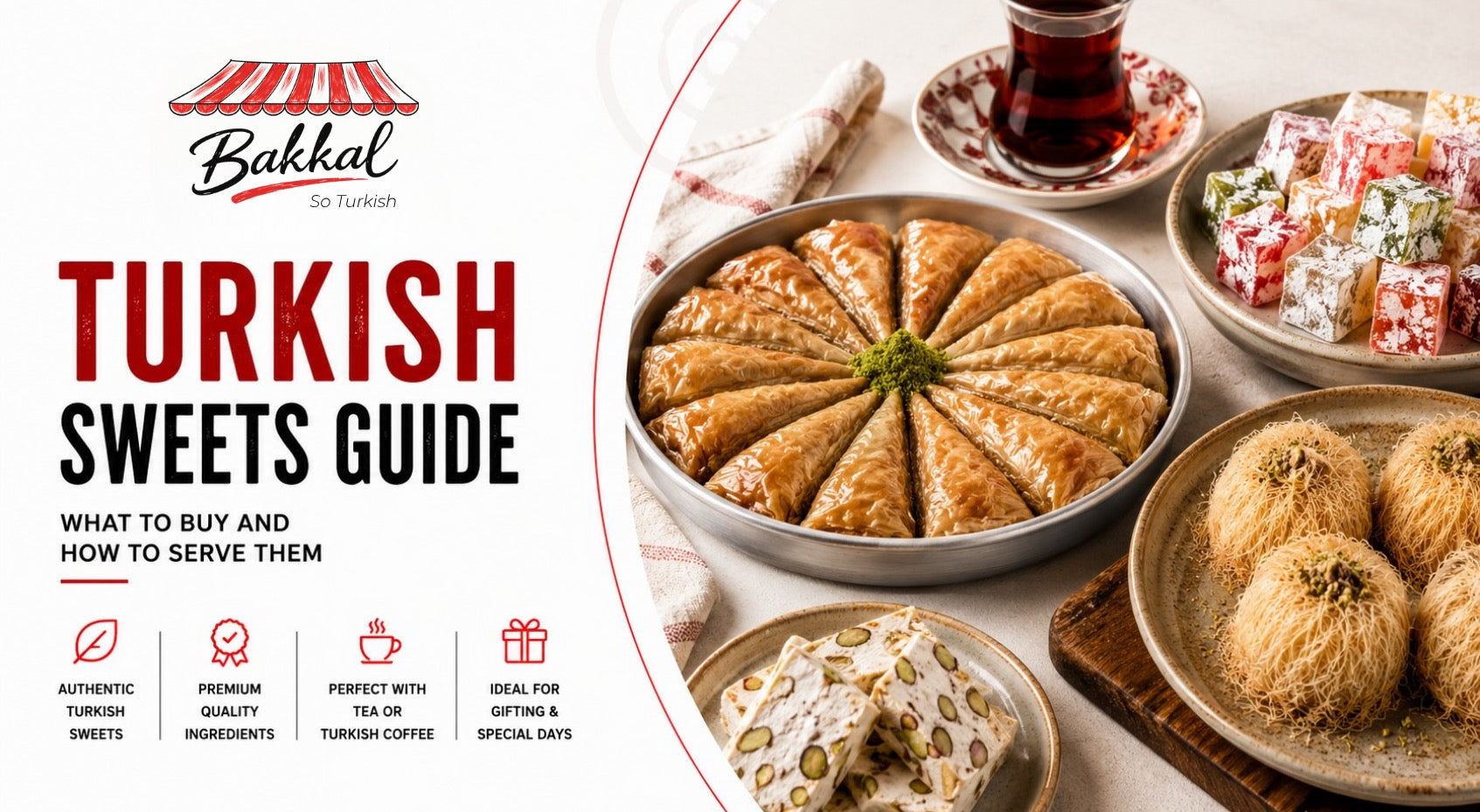
Turkish sweets are built on a few techniques repeated with deliberate refinement over centuries: soaking pastry in sugar syrup, spinning sugar into fine threads, layering nuts between paper-thin dough, setting starch and sugar into a yielding chew. The variety on any Turkish sweet shop counter is larger than it first appears, but most of it traces back to these core methods.
Which Turkish Sweet Should You Choose?
A quick way to narrow the decision, based on the occasion.
For First-Time Buyers
- Baklava
- Pistachio lokum
For Gifts
- Boxed lokum
- A mixed sweet box
For Tea Time
- Halva
- Pismaniye
For Celebrations
- Baklava
- An assorted sweets platter
Baklava
Baklava is Turkey's most recognized sweet: dozens of paper-thin phyllo layers brushed with clarified butter, filled with pistachios, baked until deeply golden, then soaked in hot sugar syrup. Done well, it's crisp on the surface and moist throughout, sweet without tipping into cloying.
Pistachio baklava from Gaziantep is the benchmark most people compare everything else to, made with a local pistachio variety ground to a vivid green powder. Walnut baklava is the other established version, earthier and more robust. Both are genuine regional traditions, not just variations on a theme.
Baklava keeps at room temperature in a sealed container for about ten days. Skip the fridge: the cold stiffens the butter between the layers and makes it harder to cut cleanly. In Turkey it's served with black tea rather than coffee, two to three pieces a generous portion per person.
Lokum (Turkish Delight)
Lokum, known internationally as Turkish delight, is a starch-and-sugar confection produced in Turkey since Ottoman times, soft and lightly chewy, dusted in icing sugar to keep the pieces from sticking. Rose is the most traditional flavor. Pistachio, with whole or chopped nuts set into the center, is the most popular today.
Chocolate-coated lokum, the whole piece enrobed in dark or milk chocolate, has become a popular gift format, and double-layered pieces combining two fillings are now standard in quality confectionery shops.
A Note on Quality
In Turkey, lokum is the traditional partner to Turkish coffee, served on a small plate beside the cup and eaten after the coffee rather than alongside it. It's also a long-established gift, especially in decorated boxes for Eid, housewarmings, and formal visits.
Halva
Turkish halva (helva) refers primarily to tahini halva, a dense confection made from sesame paste (tahini) and sugar. It has a characteristic crumbly-firm texture that softens gradually as it warms in the mouth, releasing a deep, nutty, sesame-forward flavor. The plain version is the reference point. The two most established additions are ground cocoa, which layers a bitter note over the sesame, and pistachio, which adds texture and a fresh green flavor.
Halva is not a dessert in the formal sense. It does not appear as a plated course at the end of a meal. It is served in thin slices at breakfast alongside bread and butter, offered at a tea table in the afternoon, or set out at the end of a simple family dinner. Many Turkish households keep a block of halva in the kitchen at all times. It is the most everyday of all Turkish sweets.
Tahini Halva Versus Semolina Halva
Both are called halva, but they are completely different preparations. Tahini halva is cold, sold in blocks, sliced and served at room temperature. Semolina halva (irmik helvasi) is a warm dessert cooked fresh from semolina, butter, and milk or water, spooned into bowls and served immediately. Semolina halva has a deep association with commemoration in Turkish culture and is commonly prepared for funerals and memorial meals. Only tahini halva is available commercially in block form.
Pismaniye
Pismaniye (pronounced pish-mah-NEE-yeh) is a spun sugar and flour confection that resembles a dense ball of cotton candy. The production process involves pulling a cooked mixture of sugar, oil, and roasted flour into fine threads, which are then wound together into the characteristic cloud-like ball. The texture is light and airy, collapsing quickly on the tongue into a sweetness that dissolves rather than lingers.
Pismaniye is strongly associated with the city of Kocaeli (also known as Izmit) in northwestern Turkey, where it has been made commercially for well over a century. It is widely given as a regional gift. The plain version is the most traditional and the most common. Chocolate and hazelnut varieties are available and have become popular in their own right.
Outside Turkey, pismaniye is not widely known or available. For guests unfamiliar with Turkish sweets, it is an interesting introduction precisely because it is so different from the baklava and lokum they may have encountered before.
Popular Flavor Variations
Beyond the classic pairings, flavor variety runs across the whole category, not just one or two items.
How to Serve Turkish Sweets
| Sweet | Best Served With | Occasion |
|---|---|---|
| Baklava | Turkish black tea | Eid, dinner parties, gifts for gatherings |
| Lokum | Turkish coffee | After-dinner sweet, Eid and Ramadan gifts, housewarmings |
| Halva | Morning tea or plain | Everyday breakfast, afternoon snack, commemorative occasions |
| Pismaniye | Plain or with tea | Guest gift, Eid, novel dessert for unfamiliar guests |
How to Store Turkish Sweets
| Sweet | Storage |
|---|---|
| Baklava | Room temperature, sealed container |
| Lokum | Airtight container |
| Halva | Cool, dry place |
| Pismaniye | Dry, airtight container |
General Serving Notes
- Portion sizes: Turkish sweets are rich. Two to three pieces of baklava, three or four pieces of lokum, or a thin slice of halva is a generous individual serving within a shared spread.
- Temperature: Serve at room temperature, not straight from the refrigerator. Cold stiffens the butter in baklava and the fats in halva, dulling both texture and flavor.
- Small plates: Set out two or three sweets per plate rather than one large shared tray. It's easier to serve a group and keeps flavors from bleeding into each other.
- Pairing: Always put tea or coffee on the table alongside. Turkish sweets are rarely eaten on their own.
- Mixed trays: A small tray with baklava, lokum, a slice of halva, and a ball of pismaniye puts crisp, chewy, crumbly, and airy textures side by side, giving guests a genuine introduction to the range.
Turkish Sweets and Special Occasions
The relationship between Turkish sweets and specific occasions is well established and worth knowing if you are buying for a particular event.
During Ramadan, halva appears regularly at the iftar table. It is nourishing after a day of fasting, easy to digest in small quantities, and deeply associated with the month in Turkish households. Baklava and lokum are both prominent during Eid, where they are bought in large quantities, given as gifts, and served to visiting family and friends throughout the days of celebration.
Pismaniye and lokum in individual gift boxes are standard wedding and engagement gifts in Turkey: a small box of sweets pressed into guests' hands as they leave. The same gesture translates naturally to Eid visits in the UAE, where bringing a box of quality Turkish sweets is well received by Turkish and non-Turkish hosts alike.


