

 19.54
19.54


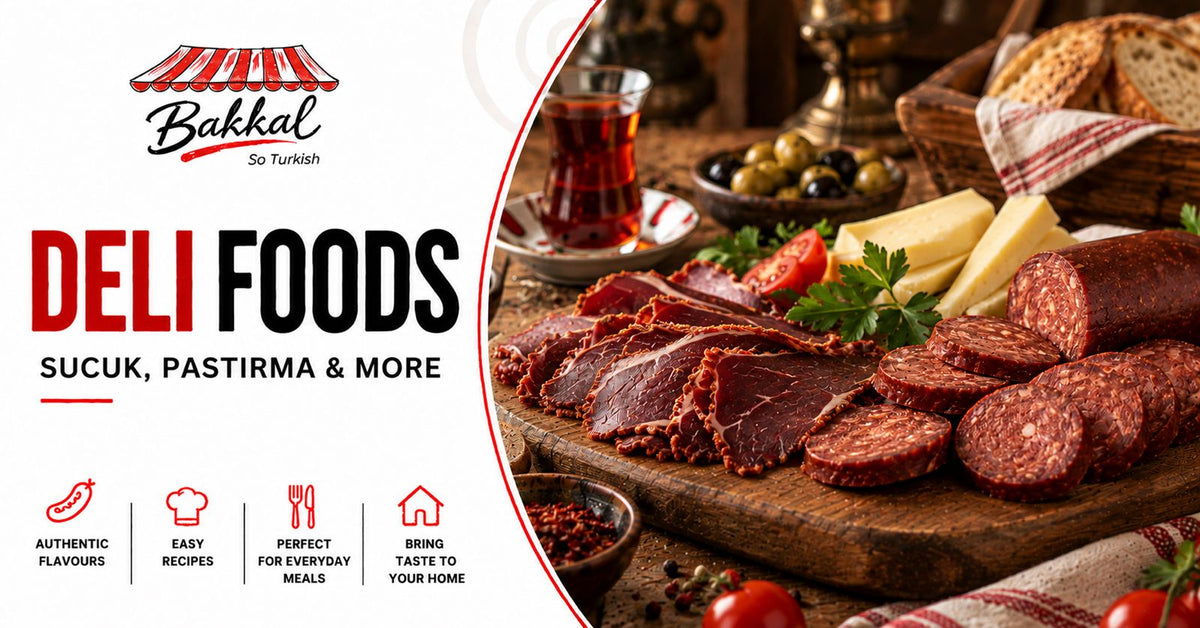
The deli counter is the shortcut shelf. Many of the products on it are cured, smoked, or cooked, which means dinner often needs little more than a pan and a few minutes rather than an afternoon of work. It is also the part of a Turkish grocery that new shoppers walk past, because the labels are unfamiliar and the pieces look like they need explaining.
They do not need much. A small selection of five or six items is enough to get started, and once you know what each one is for, breakfast and weeknight cooking get considerably easier.
What You Will Find at a Turkish Deli Counter
| Item | What it is | How it is eaten |
|---|---|---|
| Sucuk (soujouk) | Fermented, spiced beef sausage | Sliced and pan-fried, usually with eggs |
| Chicken sucuk | The same idea made with chicken, often milder depending on the producer | Cooked the same way |
| Pastırma, often labelled pastrami | Air-dried cured beef, often coated in çemen paste | Thin slices, warmed briefly or eaten as is |
| Hungarian salami | Firm beef salami, mildly smoky | Sliced for sandwiches and breakfast plates |
| Smoked turkey or chicken slices | Ready-sliced, usually lean | Sandwiches, toasties, lunchboxes |
| Kaşar cheese | Firm yellow cheese that melts well | A classic partner in deli sandwiches |
Sucuk Is the One to Start With
If you buy one thing from the counter, buy sucuk. It is typically made from beef, garlic, cumin, and red pepper, fermented and dried, and a 200 g piece can stretch across several meals. Slice it thick, put it in a cold dry pan, and let it release its own fat as the pan warms up. No oil, no butter.
Sucuk and eggs is the classic, but sliced sucuk on pide bread with kaşar makes a fast lunch, and a few rounds dropped into rice or beans near the end of cooking changes the whole pot. Our guide to sucuk goes deeper into how it is made and the different heat levels.
Pastırma and the Çemen Question
Traditional pastırma is beef that has been salted, pressed, air-dried, and then coated in çemen, a thick paste of ground fenugreek, garlic, and red pepper. The meat underneath is dense and deeply savoury. The coating is where opinions divide.
Çemen is strong. It is bitter, garlicky, and it lingers, and plenty of people love pastırma but not the paste. This is why the shelf carries both coated and uncoated versions, and why "without fenugreek" appears on some packs. If you are buying pastırma for the first time, the uncoated version is an easier place to start. If you already know you like it, the traditional çemen-coated version gives you the classic flavour.
Slice it as thinly as you can. Thick slices can be chewy and strong, while thin slices are tender and blend easily with other ingredients. It goes into eggs, onto a breakfast plate, into a toasted sandwich with kaşar, or on top of pide bread straight from the oven.
Salami and Smoked Slices for Everyday Sandwiches
The ready-sliced end of the counter does the unglamorous work. Hungarian-style beef salami is firm and mildly smoky and behaves like any good sandwich salami. Smoked turkey and chicken slices are lean and mild, a good choice for anyone who prefers gentler flavours.
These are the packs to keep for school and office lunches, layered with kaşar and a slice of tomato. Our Turkish lunchbox guide covers how to pack them and keep them cool until lunchtime.
How to Cook and Serve Turkish Deli Foods
- Sucuklu yumurta. Fry sucuk rounds until the edges curl, crack eggs straight into the fat, and cover the pan until the eggs are cooked to your liking. Bread on the side, not cutlery.
- Pastırmalı yumurta. Same idea, gentler. Warm the slices only briefly, then add the eggs so the pastırma does not toughen.
- On the breakfast board. A small pile of sucuk rounds and a fan of pastırma alongside cheese and olives turns breakfast into a proper spread. Our Turkish breakfast guide shows what else belongs there.
- Toasted sandwiches. Salami or smoked turkey with kaşar in a toastie, or sucuk with kaşar in a split pide bread.
- On top of pide bread. Sucuk and kaşar over a flatbread base, baked in a hot oven until the cheese melts and the sucuk is heated through. The Turkish bread types guide covers which breads take a topping best.
Buying, Slicing and Storing in the UAE
Deli items are among the most heat-sensitive things in a Turkish grocery order, so plan the delivery for a time when someone is home and get them into the fridge quickly. Keep them refrigerated, even when vacuum packed, and follow the storage instructions on the product packaging.
- Buy whole where you can. A whole piece of sucuk usually keeps better than pre-sliced once opened, and slicing it yourself gives you control over the thickness.
- Slice only what you are cooking. Cut surfaces dry out and darken, so keep the rest of the piece whole and refrigerated.
- Wrap cut ends properly. Baking paper then a bag, not cling film directly on the cut face.
- Freeze in portions. Sucuk and salami can usually be frozen, so check the packaging for freezing guidance. Freeze pastırma already sliced, with paper between the slices.
- Keep opened ready-sliced packs sealed and refrigerated, and follow the product's storage guidance on how soon to use them.
5 Things Worth Knowing Before You Order
- Sucuk usually needs no oil. It releases its own fat as it cooks, and extra oil can leave it greasy.
- Not all sucuk is hot. Heat levels vary by producer. Start mild if you are cooking for a family.
- "Pastrami" on the label usually means pastırma. The two names are related, but the products are prepared differently: Turkish pastırma is air-dried and often coated in çemen, while American-style pastrami is typically brined, seasoned, smoked, and steamed.
- Chicken sucuk is a real option. It suits anyone who prefers poultry to beef, and many versions are milder, though this varies by producer.
- Buy small the first time. A 200 g piece tells you what you like before you commit to a whole sausage.
Everything here sits in cold cuts and butchery, with soujouk as its own shelf and the cheese counter next door. If you are putting a first order together, our Turkish grocery shopping guide covers what else belongs in the basket.
FAQs About Turkish Deli Foods
What is the difference between sucuk and pastırma?
Sucuk is a spiced sausage, traditionally made from minced beef that is fermented and dried, and it is usually sliced and cooked before eating. Follow the pack instructions for the specific product. Pastırma is a whole muscle of beef, salted and air-dried, then traditionally coated in çemen paste, and it is usually eaten thinly sliced with little or no cooking.
What is çemen and why is pastırma coated in it?
Çemen is a paste of ground fenugreek, garlic, and red pepper. It is traditionally said to have helped protect the drying meat, and over time it became part of the flavour. It is strong and slightly bitter, which is why uncoated versions are sold alongside.
Do you need to cook pastırma?
Usually not. Traditionally cured pastırma is commonly eaten without further cooking, while some people prefer to warm thin slices briefly to soften them and bring out the aroma. Cooking it hard makes it tough, and it is worth checking the pack for any product-specific instructions.
Which Turkish deli meat is best for sandwiches?
Hungarian-style beef salami or smoked turkey slices, both with kaşar cheese. They are mild, they slice cleanly, and they are easy to pack in a chilled lunchbox.
How long do Turkish deli meats keep once opened?
It depends on the product, so once opened, keep deli meats refrigerated and follow the storage guidance on the packaging. Ready-sliced packs are usually best used soon after opening, while a whole piece of sucuk or salami generally keeps better if you slice only what you need and rewrap the cut end.
Can you freeze sucuk and pastırma?
Usually, yes. Check the packaging for freezing guidance, and freeze sucuk and salami in portions. Freeze pastırma already sliced with paper between the slices, so you can take out what you need without thawing the lot.
These are the pieces worth starting with, and they cover breakfast through to a weeknight dinner.


