

 19.54
19.54


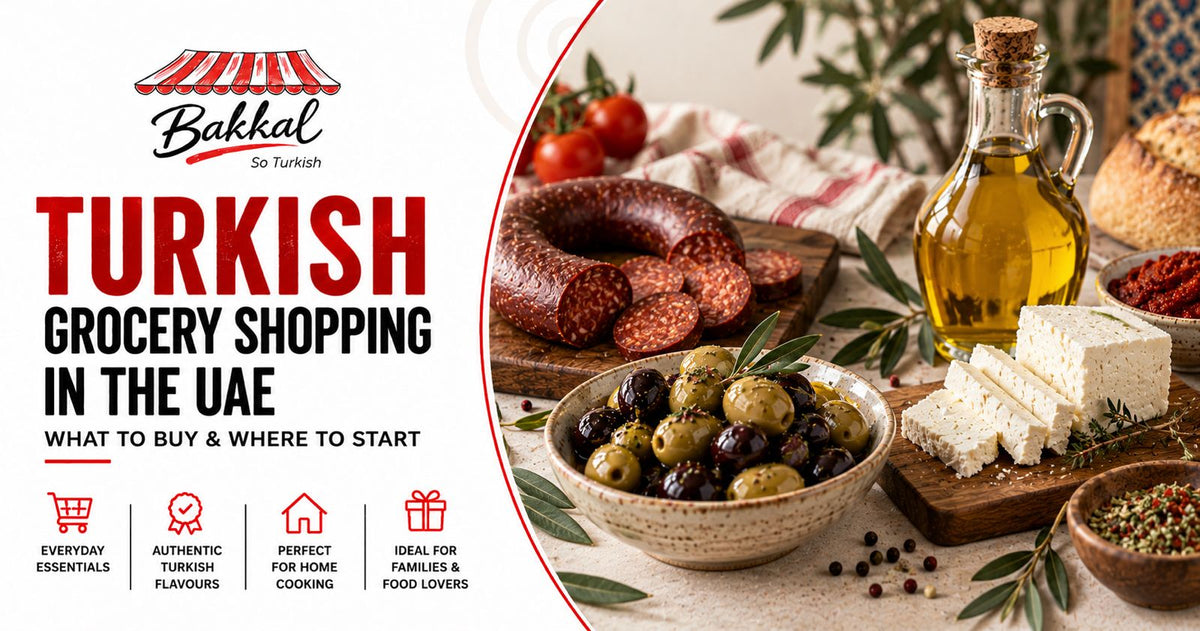
Turkish grocery shopping in the UAE looks simple until you open the first order page and find several kinds of white cheese, more than one grind of coffee, and olives sold by weight in sizes labelled M, L, and XL. None of it is difficult. It is simply organised around the way a Turkish kitchen cooks rather than the way a typical supermarket aisle is laid out.
Here is how that logic works, what belongs in a first order, and how to keep it all in good condition in a climate where summer heat can quickly affect chilled and frozen food.
What to Buy from a Turkish Grocery Store
A general supermarket may stock only a handful of Turkish products. A Turkish grocer covers the whole breakfast table and much more: dairy and cheese, deli and cold cuts, bakery, pantry dry goods, pastes and jars, olives and olive oil, sweets, and drinks, from loose black tea to the finely ground coffee used for the Turkish coffee ritual. Many Turkish dishes draw on several of those groups at once, which is why it makes sense to buy a little from each shelf rather than a lot from one.
8 Turkish Grocery Essentials to Start With
If you are new to this, buy one or two items from each group below rather than eight items from a single shelf.
| Shelf | What to buy first | Why it earns its space |
|---|---|---|
| Cheese | Ezine-style full fat white cheese | Breakfast, salads, börek, menemen |
| Olives and olive oil | Black table olives, one extra virgin oil | Used daily, at breakfast and in cooking |
| Soujouk | Fermented beef sucuk | Turns eggs or rice into a meal |
| Pastes and jars | Pepper paste, tomato paste | The base of most soups and stews |
| Dry goods | Red lentils, fine bulgur, short grain rice | Affordable, easy to store, good for weeknight cooking |
| Bakery | Simit, frozen börek, gözleme | Quick breakfasts and lunches with little preparation |
| Tea | One 500 g pack of loose black tea | An everyday staple in tea-drinking homes |
| Honey and jams | Flower honey, one fruit jam | Completes breakfast without cooking |
What Can Wait
Kaymak, comb honey, regional cheeses, and the more unusual jams can wait for a later order. Buy them once you know which parts of the table your household actually finishes. Our Turkish pantry essentials guide is a good next step when you are ready to explore further.
Useful Turkish Words on Food Labels
- Tam yağlı is full fat, yarım yağlı is half fat. On white cheese this changes the texture, not just the nutrition panel.
- On olive oil, sızma or natürel sızma means extra virgin.
- Erken hasat means early harvest. These oils are often greener and more peppery, and usually cost more.
- Acı is hot, tatlı is mild or sweet. A useful pair to know, especially on pepper paste and pepper flakes.
- Süzme means strained, usually on yoghurt.
Shopping & Storing Turkish Food in UAE Heat
UAE summers are hot, and that affects how you plan chilled and frozen orders and how quickly they need to be put away.
| Product group | Heat risk | What to do |
|---|---|---|
| Cheese, labneh, kaymak, butter | High | Refrigerate as soon as the order arrives |
| Sucuk, pastrami, cold cuts | High | Refrigerate on arrival, even if vacuum packed, unless the label says otherwise |
| Frozen börek, gözleme, mantı | High | Straight into the freezer; follow the pack guidance if anything has started to thaw |
| Chocolate, wafers, halva | Medium | Store somewhere cool, and avoid leaving them in a hot car |
| Olive oil in clear glass | Medium | Cool, dark cupboard, away from direct sunlight |
| Tea, coffee, dry goods, jars | Low | Cool, dry cupboard, and worth buying in bulk |
What to Keep in Your Pantry, Fridge & Freezer
- Pantry: tea, coffee, red lentils, bulgur, rice, olive oil, honey, and unopened jars of paste, jam, and olives.
- Fridge: white cheese, kaşar, labneh, kaymak, sucuk and cold cuts, plus opened jars of olives, paste, or jam, according to the product instructions.
- Freezer: börek, gözleme, mantı, poğaça, and anything else that arrives frozen.
Your First Turkish Grocery Order: A Practical Basket
Quantities matter as much as the list. This is a starting point for a household of three or four, so adjust it to how much you usually eat.
- Full fat white cheese, about 600 g
- Black table olives, 400 g to 800 g
- Extra virgin olive oil, 1 L to start with
- Fermented beef sucuk, one 200 g piece
- Pepper paste, one jar, sweet unless you know you want heat
- Red lentils, 1 kg, and a bag of fine bulgur
- Loose black tea, 500 g
- Simit or frozen börek, plus eggs, tomatoes, and green peppers
Easy Turkish Meals from Your Grocery Basket
That basket already covers several meals, and most of it needs very little preparation.
- Red lentils become mercimek soup in under an hour, served with lemon and bread.
- Sucuk sliced into a hot pan with eggs makes a quick meal at any time of day.
- Pepper paste stirred into rice, stews, and sauces gives them colour and depth.
- Eggs, tomatoes, and peppers make menemen, a go-to dish in many Turkish homes when nothing has been planned.
- Börek or gözleme from the freezer makes an easy lunch; bake or heat it according to the pack instructions.
- Cheese, olives, and simit with tea make a simple Turkish breakfast, and our Turkish bread types guide covers what else to put on that table.
Choosing the Right Size for Your Household
Turkish pack sizes are often larger than those in a typical UAE supermarket. A 500 g tea pack or a 5 L olive oil tin is a common household format in Türkiye rather than a catering size.
| Household | Olive oil | Tea | Olives | Cheese |
|---|---|---|---|---|
| One or two people | 500 ml to 1 L | 500 g | 400 g jar | 600 g tin |
| Family of four | 2 L tin | 500 g | 800 g jar | 600 g tin |
| Large family or frequent hosting | 5 L tin | 1 kg | 1.26 kg or larger | Two tins, different styles |
The 5 L tin deserves a note of its own. It can look like a restaurant purchase, but in many Turkish homes it is a common way to buy oil. A small bottle is filled from the tin for everyday use, and the tin stays tightly closed in a cool, dark cupboard. The cost per litre is usually lower, and the metal protects the oil from light.
6 Common Mistakes to Avoid
- Buying hot pepper paste by accident. Jars of acı and tatlı biber salçası can look almost identical, so check the label wording, not just the picture.
- Ordering chilled items to an office. Cheese and cold cuts should go into a fridge on arrival, not sit on a reception desk for the afternoon in summer.
- Comparing olive prices by total jar weight. A 1.5 kg jar may hold around 850 g once the brine is poured off, so compare drained weight against drained weight.
- Treating every white cheese as interchangeable. A firm Ezine-style cheese and a soft, milky one behave differently in salad and in börek. Our guide to Turkish cheeses covers which does what.
- Buying tea in tiny quantities. Turkish black tea is brewed strong and topped with hot water, so a 500 g pack is normal rather than a stockpile. Our Turkish tea culture guide explains the method.
- Storing olive oil next to the hob. Heat and light speed up the loss of flavour.
Delivery & Storage Tips for the UAE
Plan chilled and frozen deliveries for a window when someone will be at the door. If that is not possible, move those items to a separate order and keep the current one to shelf-stable goods.
- White cheese: once opened, keep it covered in its own brine in a sealed container in the fridge, and follow the storage instructions on the product label.
- Olives: unopened jars can go in a cool cupboard. Once opened, refrigerate them, covered by their brine or oil, according to the product instructions.
- Sucuk: refrigerate, and slice only what you are about to cook.
- Olive oil: dark cupboard, lid tight, away from the cooker.
- Loose tea: an airtight tin, since tea picks up kitchen smells quickly.
- Frozen bakery: straight into the freezer, then bake or heat according to the pack instructions.
Over time, most households find their own rhythm, ordering dairy, deli, and fresh produce more often and pantry staples and oil less frequently.
FAQs About Turkish Grocery Shopping in the UAE
What should I buy on my first Turkish grocery order?
White cheese, black olives, extra virgin olive oil, sucuk, pepper paste, red lentils, black tea, and simit or frozen börek. Those eight cover breakfast plus several cooked meals. Check the label on each product for storage guidance, especially for the cheese and sucuk.
Is Turkish white cheese the same as feta?
Close relatives, not identical. Turkish beyaz peynir is usually cow's milk, milder and less crumbly than Greek feta, and sold in brine. It works in most recipes that call for feta, though the flavour is softer.
Why is Turkish olive oil sold in 5 litre tins?
It is a common household format in Türkiye, where olive oil is used every day for cooking as well as for finishing dishes. The tin blocks light, and the cost per litre is usually lower.
What is the difference between sucuk and soujuk?
They are the same product. Sucuk is the Turkish spelling, soujuk or soujouk the transliteration used across the UAE and wider GCC. Both refer to the fermented, spiced beef sausage, usually eaten sliced and pan-fried.
How should I store Turkish groceries in the UAE?
Put chilled and frozen items away as soon as your order arrives. Keep white cheese and opened olives in the fridge, covered by their brine, olive oil in a cool, dark cupboard away from the cooker, and loose tea in an airtight tin. Dry goods keep well in a cool, dry cupboard. For everything else, follow the storage instructions on the product label.
If you are building that first basket now, this is what it looks like on the shelf.


