

 16.74
16.74


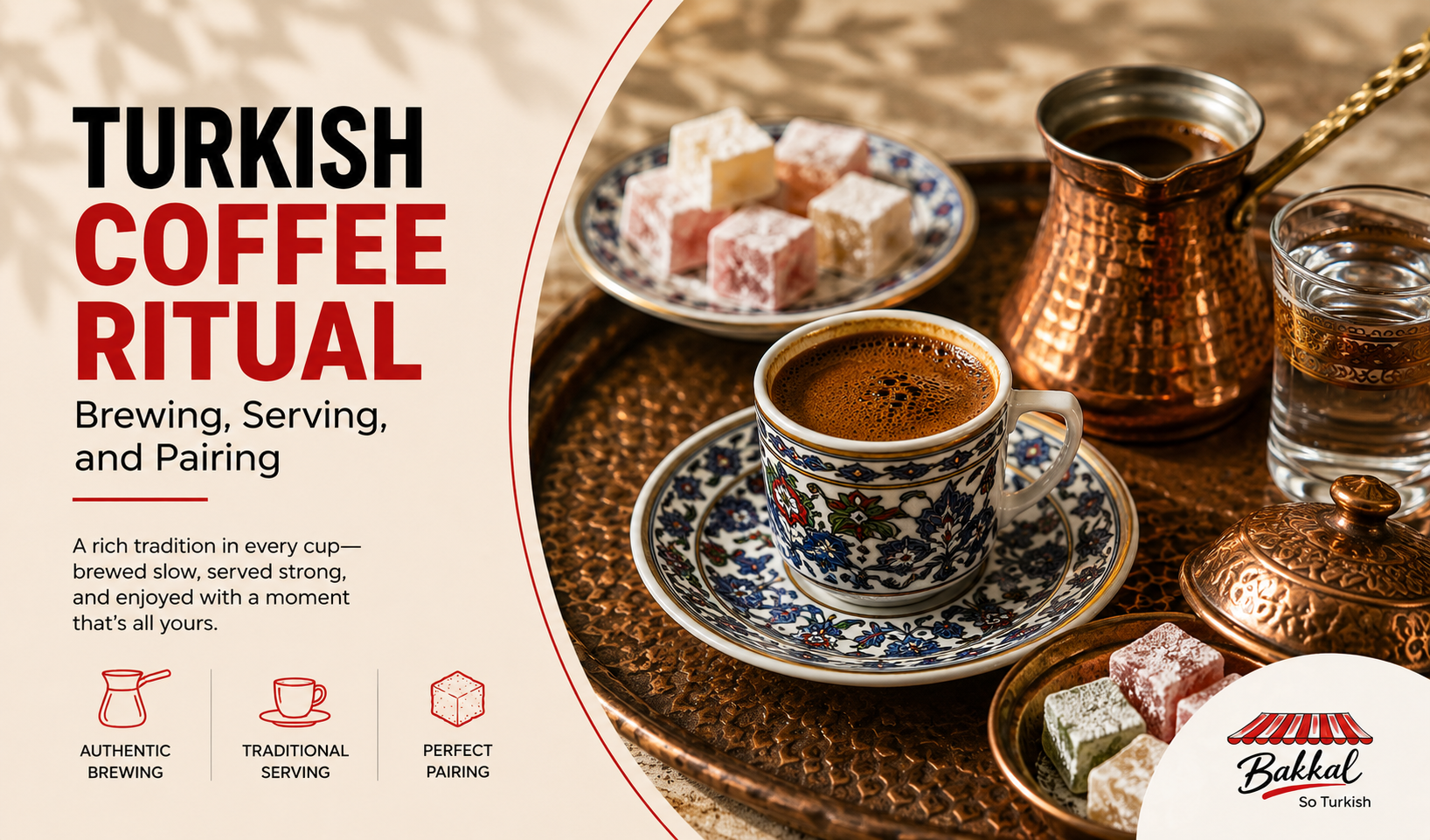
Turkish coffee was awarded UNESCO Intangible Cultural Heritage status in 2013. That recognition wasn't given for the flavour of the coffee alone. It was given for everything surrounding the cup: the deliberate preparation, the specific serving ritual, the conversation it generates, and the fortune-telling that follows once the grounds dry. Turkish coffee is not simply a method for extracting caffeine from a bean. It is a social structure in liquid form, and learning to make it well takes about one week, after which it becomes second nature.
What Turkish Coffee Is
Turkish coffee is made from very finely ground beans: finer than espresso and approaching powder: brewed without filtering in a cezve, a small long-handled pot traditionally made from copper or brass. The coffee is not filtered out. The grounds settle to the bottom of the cup, and the liquid above them is thick, slightly foamy at the surface, and considerably more intense in flavour than filtered coffee.
The defining characteristic of a properly made cup is the foam, kopuk, which forms during the slow heating process and is distributed carefully into each cup at the point of pouring. A cup of Turkish coffee served without foam is considered a failed cup in the Turkish kitchen. The foam takes patience to develop and patience to preserve.
The Coffee That Matters: Kurukahveci Mehmet Efendi
For many Turkish households, Kurukahveci Mehmet Efendi remains one of the most recognised and trusted names in Turkish coffee. The company was established in Istanbul's Spice Bazaar in 1871, making it the oldest continually operating coffee roaster in Turkey. Their blend is a medium-dark roast ground specifically for the Turkish brewing method. The texture is exactly right, the flavour profile balances mild bitterness with a smooth, slightly earthy finish, and the brand has maintained its reputation for 150 years across generations of Turkish households.
Available at Bakkal.ae in 250g and 500g packs. If you are starting with Turkish coffee, this is where to start.
How to Brew Turkish Coffee
Equipment: a cezve, a small cup (60 to 70ml), cold water
Method: serves 2
- Measure 2 small cups of cold water into the cezve: approximately 120ml total.
- Add 2 heaped teaspoons of Kurukahveci Mehmet Efendi Turkish coffee. Add sugar now if using: sade (none), az sekerli (half teaspoon total), orta (1 teaspoon total), or sekerli (2 teaspoons total). Stir once to combine.
- Place over the lowest possible heat. Do not stir again.
- Watch closely. A dark ring forms around the edge first, then a thick layer of foam begins to rise slowly. When the foam is about to reach the lip of the cezve, remove from heat immediately.
- Spoon half the foam carefully into each cup.
- Return the cezve to the heat and let the coffee rise once more. Pour slowly into the cups, disturbing the foam as little as possible.
- Wait 2 to 3 minutes for the grounds to settle. Then drink.
The essential rule: patience. Turkish coffee brewed quickly over high heat produces no foam and a harsh, flat flavour. Brewed slowly, it produces the foam and the rounded intensity the method is designed for.
The Serving Ritual
Turkish coffee arrives with a small glass of cold water and something sweet: lokum (Turkish delight) or a small piece of baklava. The water cleanses the palate before the coffee. The sweet element provides contrast to the bitterness.
The guest's sugar preference is asked when they arrive, not when the coffee is being made. A small but deliberate signal that their comfort has been anticipated and prepared for. This is not incidental; it reflects the way Turkish hospitality treats the guest's preferences as the starting point.
Fortune Telling (Kahve Fali)
After finishing the coffee, the tradition is to invert the cup onto the saucer, let it cool for five minutes, then read the patterns made by the dried grounds on the inside of the cup. This practice, kahve fali, or coffee fortune-telling, is ancient and widespread. It is taken with varying degrees of seriousness depending on the gathering, and reliably produces more laughter than prophecy. It is also, reliably, the reason everyone stays at the table for another hour.
What to Pair With Turkish Coffee
Lokum (Turkish delight): The definitive pairing. The soft sweetness of Turkish delight: pistachio, rose, or hazelnut: contrasts perfectly with the coffee's intensity. Divan Turkish Delight Chocolate Coated with Pistachio (535g) is an excellent choice.
Baklava: A single piece with unsweetened Turkish coffee is as good a dessert pairing as the UAE can offer.
Plain sesame biscuits: Less ceremonial but practical for everyday coffee at home.
Turkish Coffee in the UAE
Dubai's cafe scene includes Turkish coffee prominently. Many people still prefer preparing Turkish coffee at home, where the brewing ritual is an important part of the experience. It takes eight minutes and requires real attention, and the cup that results tastes like nothing a machine can produce.
For Turkish expats, Kurukahveci Mehmet Efendi is the taste of home: the Istanbul cafe, the grandmother's stovetop, the post-lunch ritual unchanged for 150 years. For anyone approaching Turkish coffee for the first time, it's an entry into a tradition that rewards patience well.
Shop the full Beverages range including Kurukahveci Mehmet Efendi at Bakkal.ae, and browse Turkish Delights for the traditional sweet pairings.
Frequently Asked Questions
Is Turkish coffee stronger than espresso?
Per serving volume, yes. A Turkish coffee cup holds about 60ml. The concentration is comparable to espresso, but the experience is slower: sipped rather than downed: and the cup includes settled sediment that most people stop before reaching.
Can I drink the grounds at the bottom?
Most people don't. Stop drinking when you feel resistance from the settled sediment, usually with the last sip or two remaining. The grounds are not harmful, but they have an unpleasant texture.
How is Turkish coffee different from Arabic qahwa?
Turkish coffee uses dark-roasted beans ground very finely, brewed unfiltered. Arabic qahwa uses lightly roasted beans with cardamom and sometimes saffron, brewed differently and served in small handle-less cups. Both are regional traditions with deep cultural meaning; the flavour profiles are quite distinct.
Does Turkish coffee ever have milk?
No. Turkish coffee is never served with milk. Adjust sweetness level at the brewing stage: sugar is added before heating, not after.
Why does my Turkish coffee have no foam?
Heat was too high or too fast. The foam forms during slow, patient heating. Use the lowest possible flame and never let the coffee boil. Patience is the only technique required.


