

 19.54
19.54


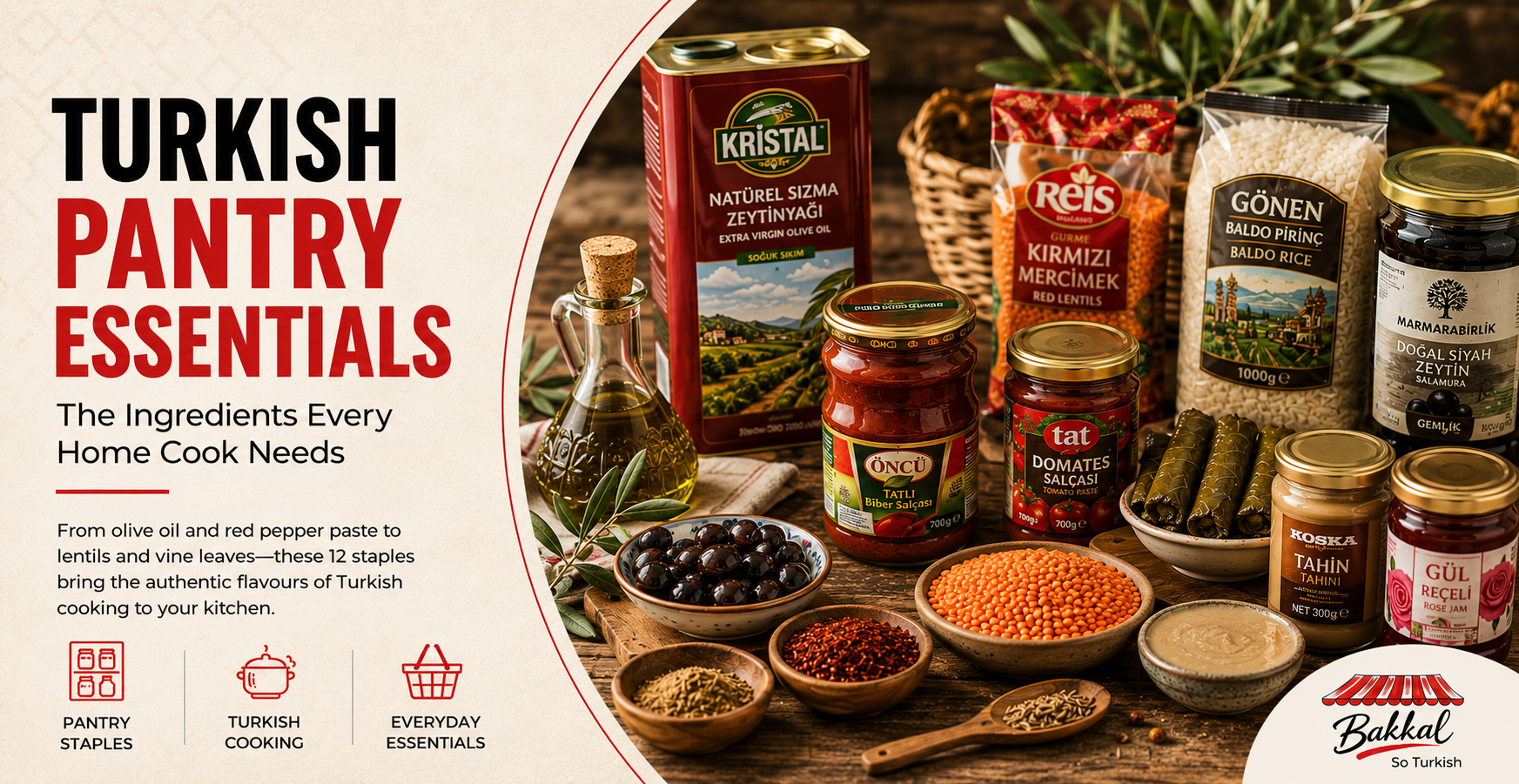
Turkish cuisine has a reputation for being elaborate, but the recipes that define Turkish home cooking are built on a relatively small number of core ingredients used consistently and with confidence. A cook who understands which twelve items belong in the cupboard can produce menemen, mercimek soup, stuffed vine leaves, pilaf, and a meze spread without a single specialist shopping trip.
Here is what belongs in a properly stocked Turkish pantry, what each ingredient does, and where to find it in the UAE.
1. Olive Oil
Turkish olive oil comes from the Aegean coast: from Izmir, Ayvalik, and Burhaniye, and it is among the world's finest. Fruity, lightly peppery, and rich without heaviness. It is used at every stage of Turkish cooking: frying, finishing, bread-dipping, and dressing. A bottle of good Turkish extra virgin olive oil is the single most impactful pantry upgrade you can make.
Use it in: Menemen, meze dips, roasted vegetables, borek pastry, salad dressings, and poured directly over white cheese with dried oregano for an instant mezze element.
2. Red Pepper Paste (Biber Salcasi)
Concentrated, brick-red, slightly sweet and gently smoky. Pepper paste is the background note in dozens of Turkish recipes. Two tablespoons fried briefly in olive oil before any other ingredient builds a flavour foundation that transforms otherwise ordinary dishes into recognisably Turkish ones. Oncu is the trusted brand at Bakkal.ae.
Use it in: Menemen, kofte sauce, pilaf, lentil soup, chicken marinades, and roasted vegetables.
3. Tomato Paste (Domates Salcasi)
Alongside pepper paste, tomato paste forms the other half of Turkey's essential cooking base. A tablespoon fried in olive oil before adding liquid to any braise, stew, or soup adds depth that stock alone cannot provide.
Use it in: Any braised meat dish, vegetable stews, soups, rice dishes, and as part of a borek filling sauce.
4. Red Lentils (Kirmizi Mercimek)
Mercimek soup, smooth, warming, finished with cumin and a squeeze of lemon, is Turkey's most widely eaten soup. It appears daily on tables from Istanbul to Ankara and takes 25 minutes from pantry to bowl. Red lentils are its foundation.
Use them in: Mercimek soup, ezogelin soup (with tomato and bulgur), cold lentil salads, and lentil-and-rice combinations.
5. Baldo Rice (Baldo Pirinc)
Turkish rice pilaf uses Baldo: a short-grain variety that absorbs stock and fat differently from basmati or long-grain rice. Cooked correctly, the grains stay distinct but carry a mild starchiness that holds sauce beautifully without clumping. Gonen Baldo Rice (1000g) is available at Bakkal.ae.
Use it in: Turkish pilaf (cooked in butter and chicken stock, often with toasted vermicelli), stuffed peppers and vine leaves (dolma), rice soups, and rice pudding (sutlac).
6. Olives (Zeytin)
Turkish table olives are distinct from the brine-heavy commercial varieties most supermarkets stock. The Gemlik variety, dry-salt cured, results in a rich, meaty olive with a slightly oily, deep flavour. They belong on the breakfast table daily and on every meze platter.
Use them in: Breakfast spreads, meze platters, pasta dishes, bread toppings, and tray-baked vegetable dishes.
7. Pul Biber (Turkish Red Pepper Flakes)
Turkish pul biber might be milder and is considerably more aromatic than standard chilli flakes, though heat levels vary between brands and batches. It functions both as a cooking spice and a table condiment: shaken over eggs, soups, and pilaf throughout the meal. A second variety worth keeping is isot (urfa biber): darker, smokier, and slightly sweet, adding a different kind of depth.
Use it in: Menemen, mercimek soup, any egg dish, grilled meats, meze dips, and as a daily table condiment.
8. Cumin (Kimyon)
Cumin is the dominant savoury spice in Turkish cooking. It appears in lentil soup, meatballs, stuffed pepper rice, and meat marinades. Ground cumin is the more versatile format; Turkish cooking uses it generously rather than sparingly. It is just as central to Middle Eastern cooking, so it is likely already a familiar pantry staple for many households in the UAE. Buy fresh and use within a year: old, faded cumin is one of the most common reasons Turkish home cooking tastes flat.
Use it in: Mercimek soup, kofte, pilaf, menemen, stuffed peppers, and any lamb or beef dish.
9. Dried Vine Leaves (Asma Yapraklari)
One of those ingredients that sounds intimidating until you have made stuffed vine leaves once. Jarred, brined, ready to rinse and use. They keep indefinitely unopened and for several weeks refrigerated once opened.
Use them in: Zeytinyagli yaprak sarma (cold olive oil-braised rice-stuffed vine leaves), warak enab (the Arabic stuffed vine leaves popular across the Levant and the Gulf, typically filled with rice and minced meat), as a bed for grilling fish, and wrapped around soft cheeses for baking.
10. Jams (Recel)
Cherry jam, rose petal jam, fig jam, mulberry jam: Turkish preserves tend toward genuine fruit flavour rather than dominant sweetness. They pair with kaymak and bread at breakfast and with aged cheeses throughout the day. A jar of sour cherry (visne) or rose petal (gul) recel is one of the most distinctively Turkish additions to any breakfast table.
Use them in: Breakfast with kaymak and simit, alongside white cheese, and as a filling for Turkish pastries.
11. Tahin (Tahini)
Turkish tahini is typically more liquid than Middle Eastern versions and roasted to a slightly lighter profile. At the breakfast table it appears as part of tahin pekmez: tahini swirled with grape molasses, one of Turkey's most ancient breakfast combinations. In meze, it forms the base of various yogurt-and-tahini dips.
Use it in: Breakfast with pekmez (grape molasses), meze dips, and drizzled over bread with honey.
12. Dried Herbs: Oregano and Dried Mint
Turkish oregano (kekik) is the default herb for vegetable dishes, olive oil toppings, and anything involving cheese. Dried mint (nane) finishes mercimek soup in the traditional way: a tablespoon of dried mint sizzled briefly in butter then poured over the soup surface just before serving. Both herbs are used constantly and keep for months in the pantry.
Use oregano in: Grilled vegetables, cheese and olive oil combinations, bread toppings, and meze spreads.
Use mint in: Mercimek soup finish, yogurt dips, and cold meze salads.
Where to Start: The Six-Item Turkish Pantry
You do not need everything at once. These six items enable the widest range of Turkish cooking from day one:
- Olive oil
- Red pepper paste
- Red lentils
- Baldo rice
- Pul biber
- Cumin
From those six, you can make mercimek soup, Turkish pilaf, menemen, a lentil salad, and a basic meze in a single afternoon. Add the remaining items as the recipes call for them.
Browse the full Turkish pantry range at Bakkal.ae: Dry Goods, Turkish Breakfast, and Beverages.
Frequently Asked Questions
How long do Turkish pantry staples last?
Dried lentils and Baldo rice last 1 to 2 years in sealed containers. Jarred vine leaves keep 2 or more years unopened and 2 to 3 weeks refrigerated once opened. Extra virgin olive oil is best within 18 months of pressing, stored in a cool dark place. Turkish jams last 12 to 18 months unopened and 2 to 4 weeks refrigerated once opened. Ground spices should be replaced when the aroma has faded, typically around 12 months.
What is the difference between red pepper paste and harissa?
Biber salcasi is made from roasted, concentrated sweet or mildly spicy red peppers without the aggressive chilli heat of North African harissa. The flavour is sweeter, less pungent, and designed as a cooking base rather than a table condiment.
Can I substitute long-grain rice for Baldo in Turkish pilaf?
Technically yes, but the result is noticeably different. Baldo's starch content gives Turkish pilaf its characteristic body and texture. Long-grain rice produces a lighter, more separated result that lacks the same richness.
Is Turkish tahini different from Middle Eastern tahini?
Turkish tahini tends to be more liquid and made from a slightly lighter roast, producing a less intensely bitter flavour. For the traditional breakfast combination with grape molasses (tahin pekmez), Turkish tahini is the right product to use.
What Turkish pantry items work best for Ramadan cooking?
Red lentils for mercimek soup at iftar, Baldo rice for pilaf, tomato and pepper paste as cooking bases, and dried herbs throughout. The Turkish pantry supports the full range of Ramadan dishes naturally: it was built for exactly this kind of daily, sustaining cooking.


