

 19.54
19.54


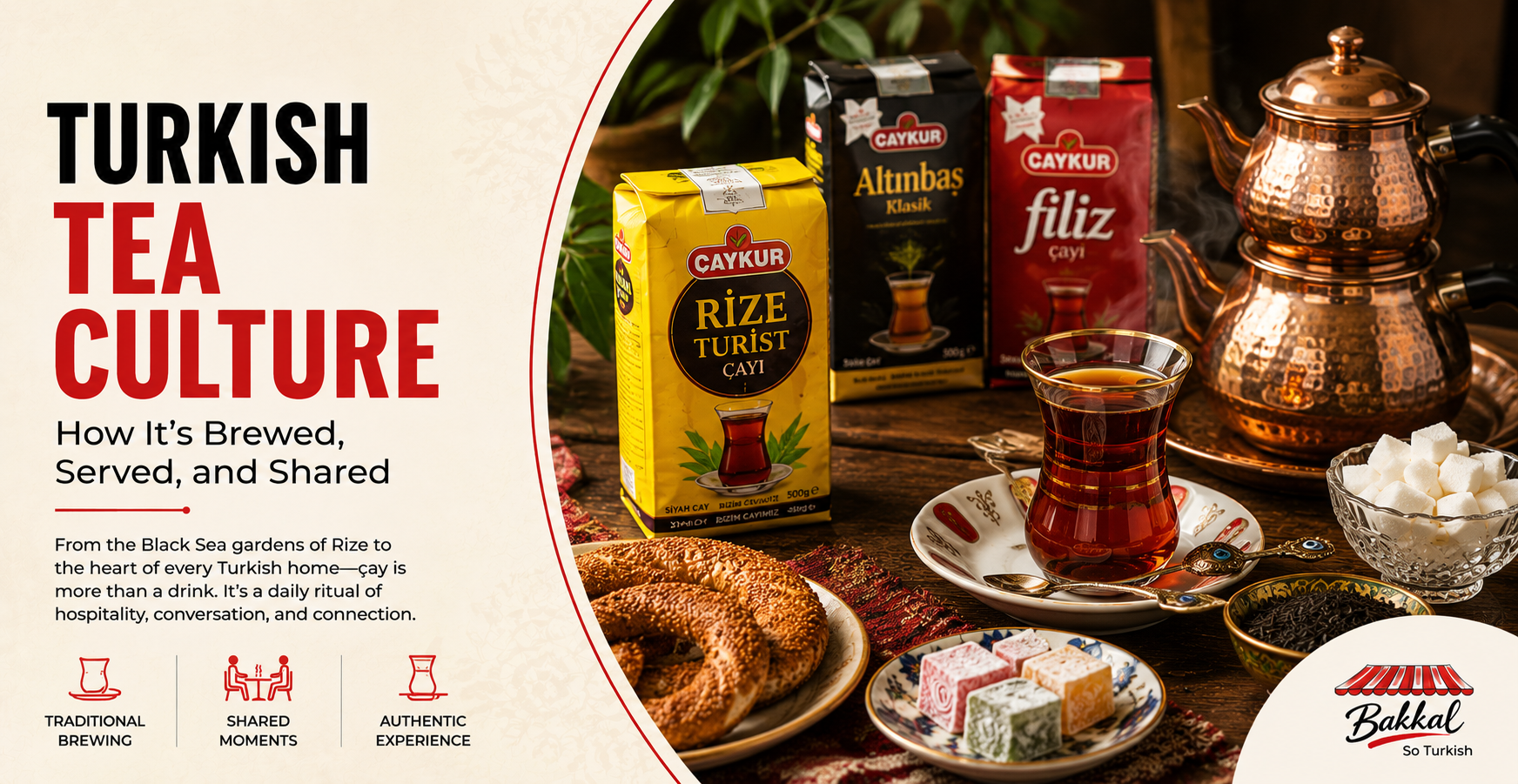
Turkey consistently ranks among the world's highest tea-consuming countries, with tea playing a central role in daily life. Step into any Turkish home, office, or shop and a glass of cay will appear within minutes, whether you asked for it or not. It shows up at breakfast, between meetings, after meals, mid-conversation, and at every pause in between. Understanding Turkish tea culture means understanding something fundamental about the way Turkish people experience community, hospitality, and time.
Where Turkish Tea Comes From
The Rize province, in Turkey's northeastern corner along the Black Sea coast, is where nearly all Turkish tea is cultivated. The climate, persistent rainfall, steep hillside gardens, and mild temperatures year-round, produces a leaf with a distinctive character: deep, slightly tannic, rich without bitterness when brewed correctly.
Caykur, established in 1940 as Turkey's state tea enterprise, sources almost exclusively from the Rize region. It remains the dominant name in Turkish tea, its packaging instantly recognisable in every Turkish kitchen from Istanbul to Ankara to across the UAE.
The name cay (pronounced "chai") shares its origin with the Chinese cha and the South Asian chai. Tea arrived in Turkey via overland trade routes, not European sea routes. It became Turkey's defining national drink by historical necessity: in the 1930s, when Turkey began developing domestic tea production to reduce dependence on imported coffee, the drink took hold with remarkable speed. By the 1950s, cay was so embedded in Turkish daily life that the idea of replacing it had become essentially unimaginable.
How Turkish Tea Is Brewed
The method requires a caydanlik: a double-stacked teapot. The lower pot holds boiling water. The upper, smaller pot holds tea leaves with a small amount of water, steeped over the steam from the pot below for 15 to 20 minutes.
The result is a dark, intense concentrate in the upper pot and a reservoir of hot water in the lower. To serve, pour a portion of concentrate, typically filling the glass about a third, then top with boiling water from the lower pot to the drinker's preference. Strong, dark tea is koyu; pale, diluted tea is acik.
This system means tea is adjusted to taste at the point of pouring, not the point of brewing. A single pot serves an entire room, each glass personalised with a different water-to-concentrate ratio. The host doesn't need to ask how you like your tea. You tell them, or you adjust it yourself.
The Tulip Glass
Turkish tea is served in a specific vessel: small, waisted, clear, shaped like a tulip. The shape serves real functions. The narrowed waist maintains heat better than a straight-sided glass. The clear glass lets you assess colour immediately: the fastest and most reliable way to judge brew strength. A deep amber glass needs diluting; a pale gold glass needs strengthening.
The glass is always held at the rim, both hands pinching the top edge, not around the body where the heat would be uncomfortable. One of those small habits so universal in Turkish culture that it starts to look natural after about three days.
What Turkish Tea Tastes Like
Properly brewed Turkish tea has a clean, slightly astringent character with a rounded finish. It lacks the floral brightness of Darjeeling, the smokiness of Lapsang, the grassy notes of Japanese green teas. It is direct and honest: the kind of flavour that prompts a second glass before the first is finished. The strength tends to be higher than most European breakfast teas, partly because the leaves are cut finely and partly because Turkish drinking culture genuinely favours a robust cup.
Which Caykur Teas to Buy
The Caykur range available at Bakkal.ae covers the main varieties worth knowing:
Caykur Rize Turist (500g)
The flagship. Named for the Rize region, dark and strong. This is the tea Turkish people mean when they simply say cay. The everyday standard, and the tea most serious breakfast tables in the UAE reach for first.
Caykur Altinbas Black Tea (500g)
A premium Rize blend with a slightly smoother profile than the Rize Turist. Also available in teapot bags, including a bergamot-flavoured version that adds a clean citrus note without abandoning the Turkish tea character.
Caykur Filiz Black Tea (500g)
A lighter, more delicate blend for those who prefer a less intense cup. A good option for afternoon drinking or for guests who find the Rize Turist too strong.
Caykur Tomurcuk Earl Grey (200g, cylindrical box)
A quality Earl Grey using the same Rize leaf base, flavoured with bergamot oil. A departure from traditional Turkish tea culture, but a well-made one that works well alongside Turkish breakfast sweets.
Browse the full Caykur selection in the Beverages collection at Bakkal.ae.
What to Serve Alongside Turkish Tea
Turkish tea accompanies rather than competes. The natural pairings:
- Simit: The sesame ring belongs beside a glass of morning tea without any argument
- Eti biscuits: The standard tea-time companion in Turkish households
- Borek: Flaky pastry, particularly cheese-filled, alongside strong tea
- Baklava: Tea's bitterness cuts through their sweetness more cleanly than coffee does
Turkish Tea Culture in the UAE
In the UAE, where tea culture is deeply embedded across many communities, Turkish tea finds a natural audience. The ritual of making tea properly, using a real teapot, brewing for the right amount of time, pouring into proper glasses, resonates in a region where hospitality is expressed through food and drink rather than convenience.
For Turkish expats, a box of Caykur in the kitchen is a non-negotiable element of feeling at home. For anyone else, it's one of the most accessible ways to begin exploring Turkish food culture: no special equipment required beyond a teapot and a willingness to wait 20 minutes.
Bakkal.ae offers a wide range of products that form part of everyday Turkish food culture. Shop the full tea range at Beverages, and explore the Turkish Breakfast collection for everything that belongs alongside the teapot.
Frequently Asked Questions
Does Turkish tea contain caffeine?
Yes. Turkish black tea has a moderate to high caffeine content, roughly comparable to a strong English breakfast tea. The koyu (dark, concentrated) serving style increases caffeine per cup.
Can I brew Turkish tea without a caydanlik?
Yes. Brew a strong concentrate in any teapot, then dilute with freshly boiled water directly in the glass. The result is slightly less nuanced than the double-pot method, but the difference is modest.
Should Turkish tea be drunk with milk?
No. Turkish tea is never served with milk. Sugar cubes are the traditional accompaniment; many people drink it completely plain.
How many infusions can I get from Turkish tea leaves?
One. Turkish black tea leaves are brewed once and discarded. Rebrewing produces a flat, weak cup without the character of the first steep.
Which Caykur tea is best for beginners?
Caykur Altinbas is the gentler starting point: smooth enough for those new to Turkish tea but still recognisably Turkish in character. Move to Rize Turist once you want the full-strength experience.


