

 19.54
19.54


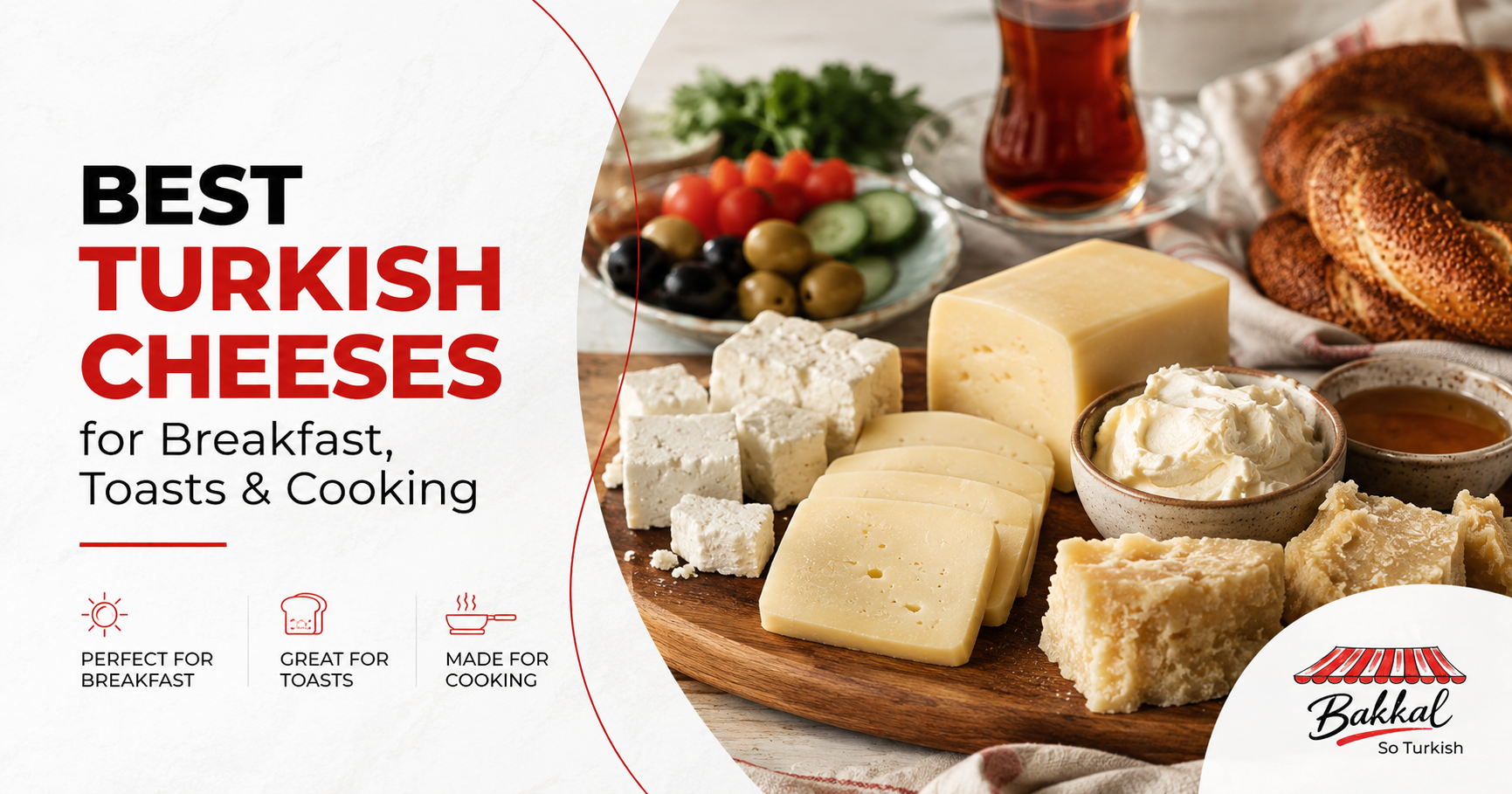
Turkish cheese culture does not receive the same international recognition as French or Italian cheese, but the variety is genuinely impressive and the quality at the top end is exceptional. For anyone building a Turkish kitchen in the UAE, two cheeses and one essential dairy staple form the foundation of any proper spread: white cheese (beyaz peynir), kashkaval (kasar peyniri), and kaymak, the clotted cream that sits alongside them at almost every Turkish table. A fourth, tulum, is worth seeking out for those who want to go further. Here is what each one is, when to reach for it, and what to buy.
White Cheese (Beyaz Peynir)
Few ingredients are as central to Turkish food culture as white cheese. It is the one item that appears on virtually every breakfast spread, regardless of region, occasion, or household. Firm, salty, and slightly tangy, it crumbles cleanly and pairs with almost every other ingredient on the table.
The most prized variety is Ezine beyaz peyniri, produced in the Ezine district of Canakkale province in northwestern Turkey. The argument for Ezine's superiority is not marketing. The specific combination of cow, sheep, and goat milk from animals grazing on the herb-rich Aegean hillsides, the traditional production methods of the region, and centuries of accumulated cheesemaking knowledge produce a cheese with real flavour complexity that is hard to replicate at larger scale.
Itimat Ezine Full Fat Cow White Cheese (660g): firm, rich, and exactly as white cheese should be, is the standard at serious breakfast tables in the UAE. Serve it cold with olives and simit. Crumble it into menemen. Layer it inside borek. Slice it for a cheese toast with sucuk under the grill.
How to Use White Cheese
- Breakfast: crumbled or sliced with olives, tomatoes, and simit
- Menemen: folded in at the end or crumbled over the top
- Borek filling: mixed with egg and herbs, wrapped in yufka or phyllo
- Grilled toast: sliced on bread, grilled until just beginning to melt at the edges
Storage
Keep refrigerated. Once opened, submerge the remaining cheese in lightly salted water, a simple brine, to extend freshness by several days compared to wrapping in clingfilm. Replace the brine every two days.
Kashkaval (Kasar Peyniri)
Kashkaval is Turkey's melting cheese. Semi-hard, mildly flavoured, with an elastic texture that becomes gloriously stretchy under heat. It is the cheese for anything involving a grill, an oven, or a hot pan. Where white cheese belongs on the breakfast plate, kashkaval belongs on anything that is going to be cooked.
Turkish kasar tends toward the fresher end of the aged spectrum, giving it a clean, milky flavour that does not dominate whatever it is paired with. It melts smoothly without separating or becoming greasy, which makes it the preferred choice for gozleme, borek, baked egg dishes, pide, homemade pizza, and the toast-and-sucuk combination that Turkish kitchens produce daily. For anyone unfamiliar with kasar, think of it as Turkey's answer to mozzarella: similar in form and meltability, but with noticeably more flavour.
Picnic Kashkaval Cheese (500g) at Bakkal.ae is the practical size for most households. Sliced straight from the pack at whatever thickness the dish calls for, it keeps for 2 to 3 weeks refrigerated once opened if wrapped properly.
How to Use Kashkaval
- Toast: sliced generously on bread, grilled until creamy and melting and beginning to brown
- Gozleme: the standard melting cheese inside Turkish flatbread
- Borek: layered inside phyllo pastry or yufka for a rich, stretchy filling
- Pide and pizza: grated or sliced over the dough before baking for a stretchy, golden melt
- Baked dishes: grated over eggs or roasted vegetables before going into the oven
Storage
Wrap in wax paper or beeswax wrap rather than clingfilm: kashkaval needs to breathe slightly. Store in the warmest part of the refrigerator. Avoid plastic bags, which trap moisture and accelerate mould.
Kaymak (Clotted Cream)
Kaymak is not technically a cheese, but it occupies the same cultural position on the Turkish breakfast table: the richest, most indulgent element of the spread, served in its own small dish and paired specifically with honey. Made by skimming and setting the thick cream from buffalo or cow's milk, kaymak has a mild, lightly sweet flavour and a dense, velvety texture somewhere between clotted cream and soft butter.
The canonical combination, kaymak spread thickly onto fresh bread, topped with a generous spoon of floral honey, is one of the genuinely great breakfast pleasures. Simple, rich, and requiring no particular skill.
Kaymak 180g at Bakkal.ae. The smaller pot format suits household use well, given kaymak's short shelf life once opened.
How to Use Kaymak
- Bread and honey: the definitive application: spread thickly, add honey, eat
- With jam: alongside sour cherry or rose petal jam on fresh simit
- Alongside baklava: a small spoon cuts the sweetness of the pastry
- Stirred into warm rice pudding (sutlac) just before serving
Storage
Refrigerate. Use within 3 to 4 days of opening. Does not freeze well.
Tulum Peyniri (Aged Pouch Cheese)
Tulum is a sharper, crumblier aged cheese, traditionally made from sheep's or goat's milk and aged in an animal-skin pouch (tulum). The flavour is pungent, complex, and considerably more assertive than fresh white cheese, closer in character to aged feta or a mild blue cheese without the mould. It has a dry, crumbly texture that works beautifully in borek, crumbled over salads with olive oil, or on cheese boards alongside walnuts and honey.
Less commonly available than the first three, but worth seeking out for those who want to explore the full range of Turkish cheese culture. Itimat Izmir Tulum Cheese (350g) is a reliable place to start.
Side-by-Side Comparison
| Cheese | Texture | Flavour Profile | Best Application |
|---|---|---|---|
| Ezine White Cheese | Firm, crumbly | Mild, salty, slightly tangy | Breakfast table, borek, eggs |
| Kashkaval | Semi-hard, elastic | Mild, milky | Toast, gozleme, baked dishes, pide |
| Kaymak | Dense, creamy | Rich, lightly sweet | Breakfast with honey, alongside baklava |
| Tulum | Crumbly, dry | Sharp, aged, complex | Borek, salads, cheese boards |
Shopping for Turkish Cheese in the UAE
The core Turkish cheese range at Bakkal.ae covers everything needed for a complete Turkish kitchen. Browse the full selection in the Dairy collection, and pair your cheese shop with the Turkish Breakfast essentials that complete the table.
Frequently Asked Questions
What is the difference between beyaz peynir and feta?
Both are brined white cheeses with overlapping textures and salt levels. Feta is Greek, EU-protected, and must use sheep's or goat's milk from designated Greek regions. Beyaz peynir is Turkish and can use cow, sheep, goat, or mixed milk. Authentic beyaz peynir is typically slightly milder than commercial feta.
Can Turkish white cheese be frozen?
Yes, though freezing changes the texture: it becomes more crumbly and less smooth after thawing. For cooking applications like borek and eggs, this is fine. For the breakfast plate, fresh is noticeably better.
Does kashkaval melt without becoming stringy?
It melts smoothly: less stringy than mozzarella, more fluid than aged cheddar. For Turkish toast and gozleme, this is exactly right.
Which Turkish cheese is best for melting?
Kashkaval is the clear choice for any application involving heat. It melts evenly, stretches without breaking, and does not release excess oil. White cheese also softens under heat but retains more structure, which makes it better for borek filling than for toast topping.


