

 19.54
19.54


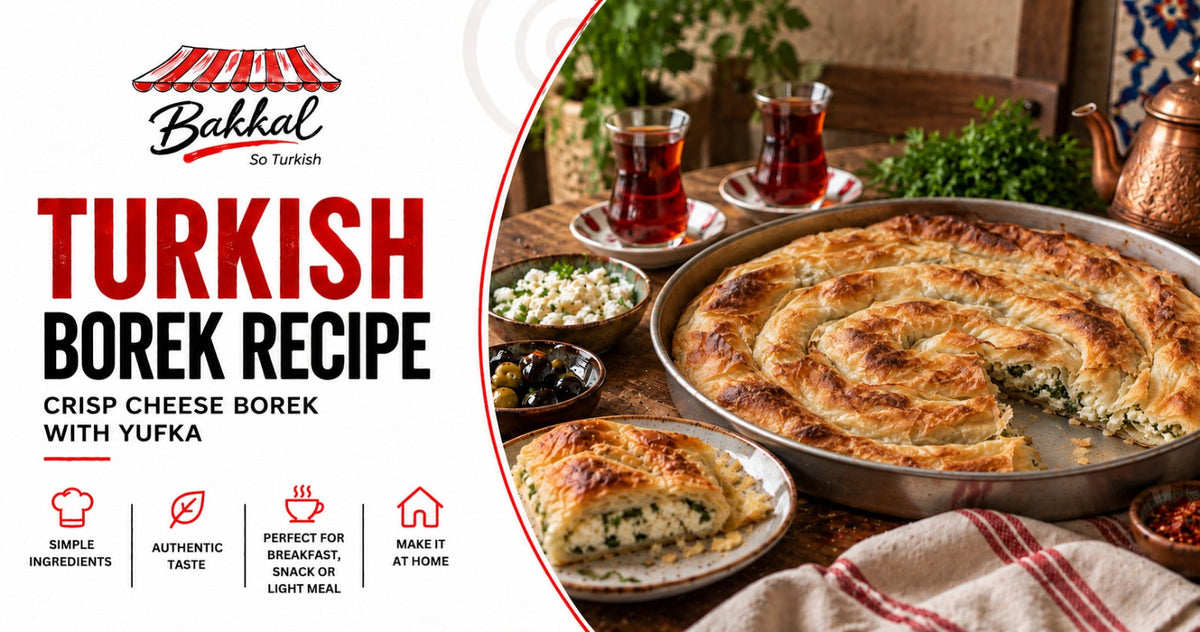
Börek is the pastry Turkish families reach for when people are coming over, when there is leftover cheese in the fridge, or when tea is on and nobody wants biscuits. In this recipe, thin yufka pastry is brushed with a mix of milk, egg, sunflower oil, and melted butter, then filled with white cheese and parsley and rolled. The mix soaks into the pastry and keeps the inside tender while the top bakes golden and crisp.
This is the rolled version, kol böreği, a practical style to make at home. No stretching, no special tin, and about twenty minutes of work before the oven takes over.
Recipe at a Glance
| Preparation Time | 20 minutes |
|---|---|
| Baking Time | 35 to 40 minutes |
| Total Time | 1 hour |
| Servings | 6 people, one large tray |
| Cuisine | Turkish |
| Course | Breakfast, snack, light meal |
Ingredients
For the Börek
- 5 sheets of yufka pastry, about 500 g
- 400 g full fat white cheese, crumbled
- 4 tablespoons finely chopped flat leaf parsley
- 200 ml milk
- 1 egg
- 80 ml sunflower oil
- 50 g butter, melted
For the Top
- 1 egg yolk
- 1 tablespoon milk
- 1 tablespoon sesame seeds or nigella seeds
A Note on the Yufka
Yufka is thin, pliable and slightly chewy, closer to a very thin flatbread than to filo. It is what gives börek its soft layers. Filo works if yufka is not on the shelf, but it is drier and more brittle, so you need more of the milk mixture and a gentler hand. Keep yufka sealed until the moment you use it, because it dries out on the counter within minutes.
Step-by-Step Instructions
- Make the wet mix. Whisk the milk, egg, sunflower oil, and melted butter in a jug until smooth. This is what soaks between the layers and keeps the börek from drying out.
- Mix the filling. Crumble the white cheese into a bowl and fork through the parsley. If your cheese is very salty, use a milder white cheese, or soak it briefly in cold water, then drain it well and pat it dry.
- Cut the yufka. Stack the sheets and cut them into halves or quarters, depending on how long you want the rolls. Cover the pieces you are not working on with a clean tea towel.
- Brush and fill. Lay one piece down, brush it generously with the wet mix, and spread a line of filling along the wide edge, leaving a couple of centimetres clear at each end.
- Roll them up. Fold the sides in and roll into a loose log. Loose matters. Rolling too tightly leaves the filling less room to expand, which makes the börek more likely to split in the oven.
- Arrange the tray. Lay the rolls side by side in a greased tray, or coil them into a spiral from the centre outwards. Pour any remaining wet mix over the top and let it sit for ten minutes so the pastry absorbs it.
- Glaze and bake. Whisk the yolk with a tablespoon of milk, brush the top, and scatter over the sesame or nigella seeds. Bake at 190°C for 35 to 40 minutes, until the top is deep gold and the edges are crisp.
- Rest before cutting. Ten minutes in the tray. Cutting straight from the oven tears the layers.
Chef Tips
- Be generous with the wet mix. Under-soaked börek is the most common home failure. The pastry should look damp before it goes in, not merely brushed.
- Rest the tray for ten minutes before baking. That pause is what turns separate sheets into layers.
- Work with the yufka covered. A damp tea towel over the stack buys you fifteen minutes of workable pastry instead of three.
- Freeze it raw. Assemble the tray, cover it tightly, and freeze. Bake a homemade tray from frozen at 180°C for about 50 minutes, until golden and cooked through in the middle.
A Few Things to Avoid
- Rolling too tightly. The filling expands and the roll splits along the seam.
- Overfilling. A thin line of cheese along the edge is enough. More leaks out and burns on the tray.
- Using a wet filling. Drain the cheese and dry the parsley. Water turns the bottom layers to paste.
- Baking on too high a heat. The top browns before the middle sets, and you get a crisp lid over raw pastry.
Baking Frozen Börek
On busy weeks, rolling börek from scratch is not always practical. Ready-made frozen börek from the bakery and pastry shelf needs very little hands-on work, since most of the time is spent in the oven, and many households keep it in the freezer for exactly that reason.
For ready-made frozen börek, check the pack instructions first, as they vary by product. As a general guide, bake it from frozen, never thawed. Thawed börek goes limp and steams instead of crisping. Brush the top with beaten egg or a little milk before it goes in, give it 25 to 30 minutes at around 190°C, and add a few minutes if the underside still looks pale. Bosnian-style rolls and rose-shaped gül böreği take slightly longer than flat trays because they are thicker. A full homemade tray frozen raw is a different case and needs longer at a lower temperature, as described in the Chef Tips above.
Storage Advice
| State | How to store | Keeps for |
|---|---|---|
| Assembled, unbaked | Covered tray in the fridge | Up to 24 hours |
| Assembled, unbaked | Wrapped tightly in the freezer | Up to about 2 months for best quality |
| Baked | Airtight container in the fridge, once cooled | Up to 2 days |
| Baked | Sealed bag in the freezer | Up to about 1 month for best quality |
These are general guidelines for homemade börek. Because it contains cheese, egg, and milk, refrigerate baked börek once it has cooled rather than leaving it out, and follow the pack instructions for ready-made börek.
Reheat baked börek in a hot oven for five to eight minutes rather than a microwave, which softens the layers you worked for.
What to Serve With Börek
Börek belongs on the Turkish breakfast table next to white cheese, olives, and tomato, and it belongs with a glass of Turkish tea at five in the afternoon. Both are correct and Turkish households do both.
As a light dinner it works with a bowl of soup and a plate of sliced cucumber and tomato from fresh produce. Börek can also be enjoyed once it has cooled, which makes it a handy lunchbox option, and our Turkish lunchbox guide covers this in more detail. If you want to go further into the bakery shelf, our Turkish bread types guide explains what else is worth trying.
FAQs About Turkish Börek
What is Turkish börek made of?
Thin yufka pastry, a filling, and a liquid mix of milk, egg, and oil or melted butter poured between the layers. The classic fillings are white cheese with parsley, spinach and cheese, potato, or minced meat.
Can I use filo pastry instead of yufka?
Yes, though the texture changes. Filo is thinner and drier, so use more of the milk mixture and handle the sheets gently. Yufka gives the softer, slightly chewy layers most people mean by börek.
What cheese is best for börek?
Full fat white cheese is the standard, crumbled and mixed with parsley. It holds its shape and stays creamy rather than turning oily. Kaşar can be added for stretch, and our guide to Turkish cheeses covers which types behave how.
Why does my börek come out dry?
Not enough of the milk and egg mixture, or not enough resting time before baking. The pastry needs to look wet going into the oven, and ten minutes on the counter lets it absorb properly.
Can I freeze börek before baking?
Yes, and it is the better way to freeze it. Assemble the tray, wrap it tightly, and bake straight from frozen at 180°C for about 50 minutes. Freezing after baking works too but costs you some crispness.
What is the difference between börek and baklava?
Börek is savoury, made with yufka and moistened with milk and oil between the layers. Baklava is a dessert, made with much thinner filo, layered with butter and nuts, and soaked in syrup after baking.
Yufka, white cheese, and butter are the heart of this recipe, with milk, eggs, sunflower oil, parsley, and seeds for the top completing the list. For the weeks you have no time for rolling, the freezer shelf has you covered.


